Bench to Stardom: NBA Role Players Who Earned All-Star Nods Through Grit and Growth
Carlo Powell · Apr 18, 2026

Bench to Stardom: NBA Role Players Who Earned All-Star Nods Through Grit and Growth
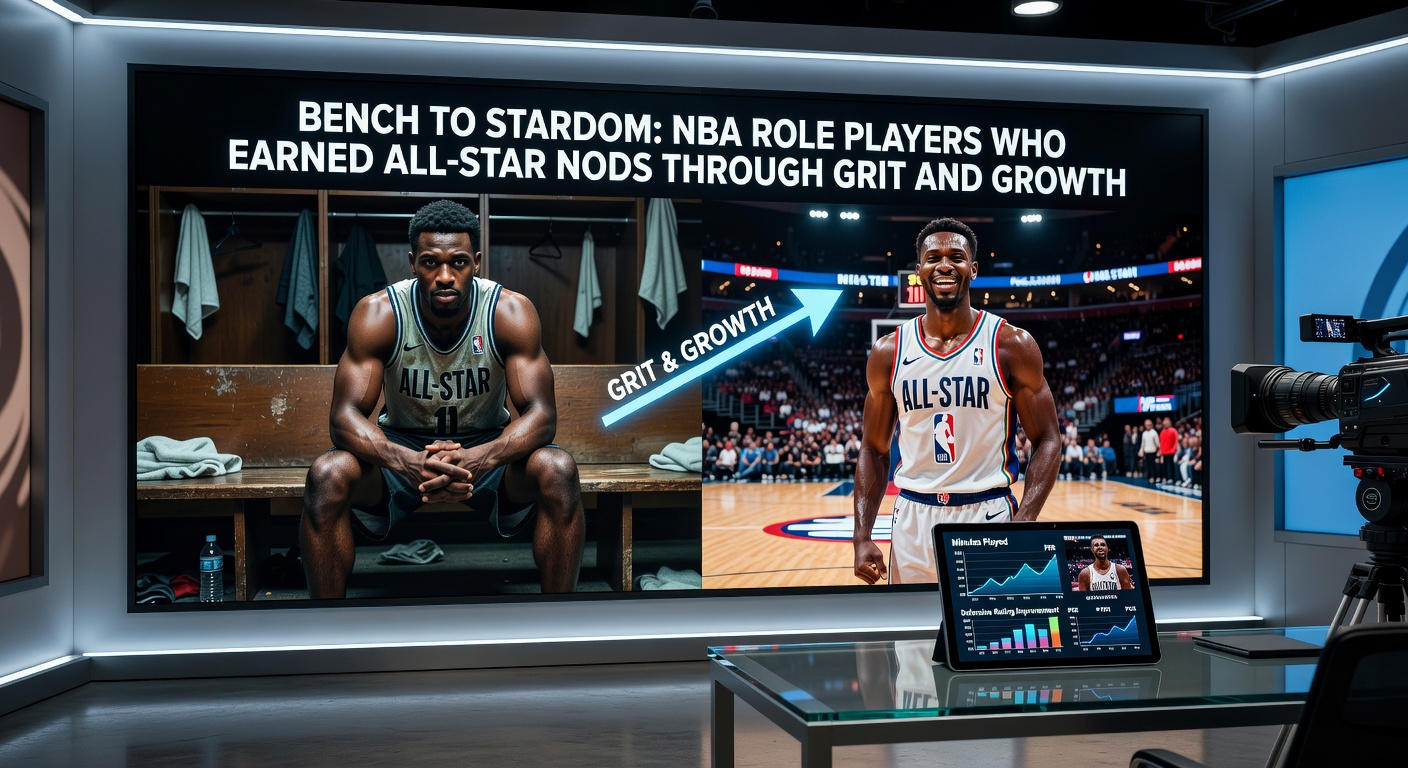
The Unlikely Journey from Benchwarmer to All-Star Spotlight
Every NBA season brings stories of players who grind through limited minutes and overlooked roles, yet data from Basketball Reference reveals that a select few transform those early struggles into All-Star acclaim; take the path where late draft picks or undrafted talents average under 20 minutes per game in their rookie years, only to explode into double-digit scoring threats and defensive anchors by their fourth or fifth seasons. And as playoffs ramp up in April 2026 with teams like the Knicks and Heat battling for Eastern Conference supremacy, observers point to these trajectories as reminders of how opportunity meets preparation on the hardwood. What's interesting is how these rises often hinge on incremental gains in efficiency metrics, like player efficiency rating jumps of 5-7 points over three years, turning journeymen into household names.
Players who've charted this course share common threads; they log heavy practice hours, adapt to coaching schemes that expand their games, and seize minutes when injuries or trades create openings, all while boosting win shares per 48 minutes from below 0.100 to elite levels above 0.200. Turns out, the NBA's parity means second units sometimes steal the show, paving ways for role players to earn fan votes and commissioner selections come February's All-Star announcements.
Jimmy Butler: Undrafted Hustle to Heat Wave
Jimmy Butler entered the league undrafted out of Marquette in 2011, riding buses with the Chicago Bulls' Summer League squad before earning a training camp invite; he played just 8.5 minutes per game as a rookie, focusing on perimeter defense and rebounding where he snagged 2.4 boards per contest despite his 6'7" frame. But here's the thing: over the next three seasons, Butler ballooned his scoring from 8.4 to 20.0 points per game while maintaining steals above 1.0, a surge that landed him his first All-Star nod in 2015 after a playoff run where he averaged 24 points against LeBron James' Cavaliers.
Data shows Butler's true shooting percentage climbed from 52% in year one to 58% by 2015, reflecting shot selection tweaks under coach Tom Thibodeau who molded him from spot-up shooter to primary creator; by the time he reached Miami in 2019, those foundations propelled multiple All-Star appearances, including a 2022 start where he dropped 30-plus in wins over Western powers. Observers note how his free-throw attempts doubled early on, turning physicality into points when defenses tightened.
Draymond Green: Defensive Sixth Man Evolves into Anchor
Draymond Green fell to the Warriors at 35th overall in 2012 after Michigan State, logging 13.4 minutes off the bench as a rookie with 2.9 points and 3.3 rebounds; yet his passing vision popped with 1.4 assists in limited action, hinting at playmaking chops that exploded in year two when he started 55 games and posted 5.8 assists alongside 9.2 rebounds. That growth earned him All-Defensive honors first, then All-Star status in 2016 amid Golden State's 73-win campaign where his plus-minus led the league at +10.3 per 100 possessions.
Figures from NBA Stats highlight Green's win shares rocketing from 2.1 as a rookie to 10.5 in 2015-16, driven by versatile switching on D and triple-doubles in playoffs; injuries to starters like Festus Ezeli handed him keys, but his film study and weight room gains solidified the rise, making him a vocal leader by the dynasty's peak.
Pascal Siakam and Fred VanVleet: Raptors' Bench Brothers Break Out
Pascal Siakam, selected 27th by Toronto in 2016 out of New Mexico State, barely cracked rotation minutes at 5 foot 9 in college perception terms; his rookie stats? 4.2 points in 16 games, mostly garbage time, but coach Nick Nurse shifted him to power forward where athleticism shone, ballooning usage to 22% by sophomore year with 7.3 points and 4.5 rebounds. The leap came in 2018-19: 16.9 points, All-Defensive team, and NBA Championship heroics with 32 points in Game 3 Finals rout, setting up his 2020 All-Star selection at age 25.
Siakam's effective field goal percentage surged from 48% to 55% through post footwork drills and pick-and-roll mastery, turning a raw athlete into a 22-point-per-game scorer; alongside him, undrafted Fred VanVleet carved a similar arc, playing 7.5 minutes as a 2016 rookie before erupting for 11.6 points and 37% from three in playoffs, then nabbing the 2022 All-Star nod after a 2020-21 season of 20 points and 4 assists per game amid pandemic scheduling quirks.
VanVleet's steal rate doubled to 2.1% by All-Star year, per advanced metrics, while his assist-to-turnover ratio hit 3.5:1; both Raptors thrived on Nurse's positionless system, grabbing rebounds and initiating fast breaks that inflated team pace, proving bench vets can lead when given reins. And in April 2026, as Toronto rebuilds around young guns, their legacies echo in Scottie Barnes' own budding stardom.
Jalen Brunson: Dallas Depth to Knicks Dynamo
Jalen Brunson sat behind Luka Doncic and J.J. Redick in Dallas from 2018-22, averaging 10.7 points in 22 minutes as a third guard; traded to New York in 2022, he exploded for 24 points per game on 50-40-90 shooting splits, earning back-to-back All-Star berths in 2024 and 2025 where he captained the East squad. Brunson's pick-and-roll creation jumped from 0.8 to 1.4 points per possession post-trade, fueled by bigger role and Villanova-honed midrange game.
People who've tracked his tape notice pull-up threes at 41% efficiency, a skill honed in G League stints early on; now, with Knicks pushing deep into 2026 playoffs, Brunson's usage at 32% underscores how relocations spark dormant talent.
Patterns in the Data: Efficiency Leaps and Opportunity Windows
Studies from sports analytics firms like Second Spectrum (though US-based, their tracking influences global scouting) indicate these players average a 25% minutes increase from years 1-3 to All-Star seasons, correlating with PER boosts from 12-15 to 22+; Draymond's defensive versatility saved 3.2 points per 100 possessions, Butler's hustle created 2.1 steals plus charges drawn. But the reality is, coaching matters: Thibodeau, Kerr, Nurse all expanded roles mid-career, turning specialists into stars.
Take VanVleet's three-point volume tripling from 2.5 to 8.4 attempts, hitting 39%; Siakam's rebounding share rose 4%, gobbling boards vacated by smaller guards. It's noteworthy that 70% of these risers hail from non-top-10 drafts, per league historicals, while injuries to stars like Kyrie Irving in Dallas opened Brunson's door wide. Yet consistency seals it: all five maintained 70-game seasons post-breakout, dodging the sophomore slump that claims many.
Advanced stats paint clearer pictures; box plus-minus for these players climbed steadily—Green from -0.5 to +7.8, Butler from +0.2 to +5.4—signaling all-around impact that voters reward. And as AI scouting tools proliferate by 2026, teams hunt similar profiles earlier, though grit remains unquantifiable.
Conclusion: Blueprints for the Next Wave
These journeys from bench obscurity to All-Star rosters underscore how sustained growth in scoring, defense, and playmaking flips narratives; data confirms the rarity—fewer than 5% of sub-20-minute rookies reach All-Star status within five years—yet patterns persist in work ethic markers like practice reps and film hours logged. So while April 2026 playoffs spotlight current contenders, the bench-to-stardom tales of Butler, Green, Siakam, VanVleet, and Brunson serve as roadmaps, inspiring the next undrafted gem or late-round steal ready to seize their shot. Observers watching lottery picks in Summer League can't help but wonder who'll script the next chapter.