Cinderella Runs: Mid-Major Miracles That Lit Up March Madness
Sam Keller · Apr 16, 2026

Cinderella Runs: Mid-Major Miracles That Lit Up March Madness
The Magic of Mid-Major Surprises in March
March Madness thrives on unpredictability, yet few elements capture fans' imaginations quite like mid-major teams staging improbable runs; these underseeded squads from smaller conferences often enter the tournament overlooked, only to ignite brackets and headlines with string after string of upsets. Data from the NCAA records reveals that since the field expanded to 64 teams in 1985, at least one double-digit seed has reached the Sweet 16 in every tournament, while mid-majors like those from the Atlantic 10, Missouri Valley, or Horizon League punch above their weight more often than expected. Observers point out how these runs, dubbed Cinderella stories after the fairy tale underdog, not only shatter seeding expectations but also boost television ratings; for instance, networks report viewership spikes of up to 20% during games featuring surprise teams, according to Nielsen data analyzed by sports media outlets.
But here's the thing: these miracles don't happen by accident, although luck plays its part; coaches drill fundamentals relentlessly, players embrace team-first mentalities, and matchups sometimes align perfectly, allowing lesser-known programs to topple blue-blood giants. Take the landscape in recent years leading into April 2026, where whispers of potential mid-major breakouts circulate amid conference tournaments, setting the stage for another tournament ripe with possibilities.
Roots of the Cinderella Phenomenon
Early tournaments laid the groundwork for these tales long before the modern bracket format took hold; in 1947, Holy Cross, a mid-major from the independent ranks, stormed to the title game as an 8th seed equivalent, beating powerhouses like Oklahoma along the way, while City College of New York followed suit in 1950 as the only team ever to win both the NIT and NCAA titles amid a point-shaving scandal that rocked the sport. Fast forward to the 1980s, and the blueprint solidified; Villanova's 1985 championship run stands as the gold standard, where the 8th-seeded Wildcats from the Big East—often considered mid-major adjacent—shot an astonishing 78.6% from the field in the final against Georgetown, clinching a 66-64 victory that remains etched in lore.
And yet, the 1990s brought pure mid-major magic; Coppin State, a 15th seed from the MEAC, stunned No. 2 seed South Carolina 78-65 in the first round of 1997, marking the first 15-over-2 upset and opening floodgates for lower seeds. Researchers at Saint Louis University, in a study published through their sports analytics department, found that such upsets correlate with defensive efficiency metrics exceeding expectations by at least 15%, highlighting how preparation trumps talent disparities.
Iconic Runs That Defined Eras
George Mason's Final Four Shock in 2006
George Mason Patriots, an 11th seed out of the Colonial Athletic Association, scripted one of the most improbable journeys ever; they navigated past Michigan State, North Carolina, Wichita State, and Florida to reach the Final Four, falling just short to the eventual champions, while their coach Jim Larranaga emphasized selfless play that propelled them through. Figures from CBS Sports archives show the Patriots held opponents to under 40% shooting in four straight wins, a feat that mid-majors rarely replicate; fans still recall the Detroit regional as the tournament's turning point, where underdogs suddenly became must-watch TV.
VCU Rams Rampage from the First Four
Fast forward to 2011, and Virginia Commonwealth University pulled off an even wilder feat; as an 11th seed entering via the new First Four, the Rams from the Colonial Athletic Association toppled USC, Georgetown, Purdue, Florida State, and Kansas to reach the Final Four, only bowing out to Butler, while coach Shaka Smart's "Havoc" defense forced 25% more turnovers than average. Data indicates VCU outrebounded higher seeds by nine per game during the run, a key factor experts attribute to their success.
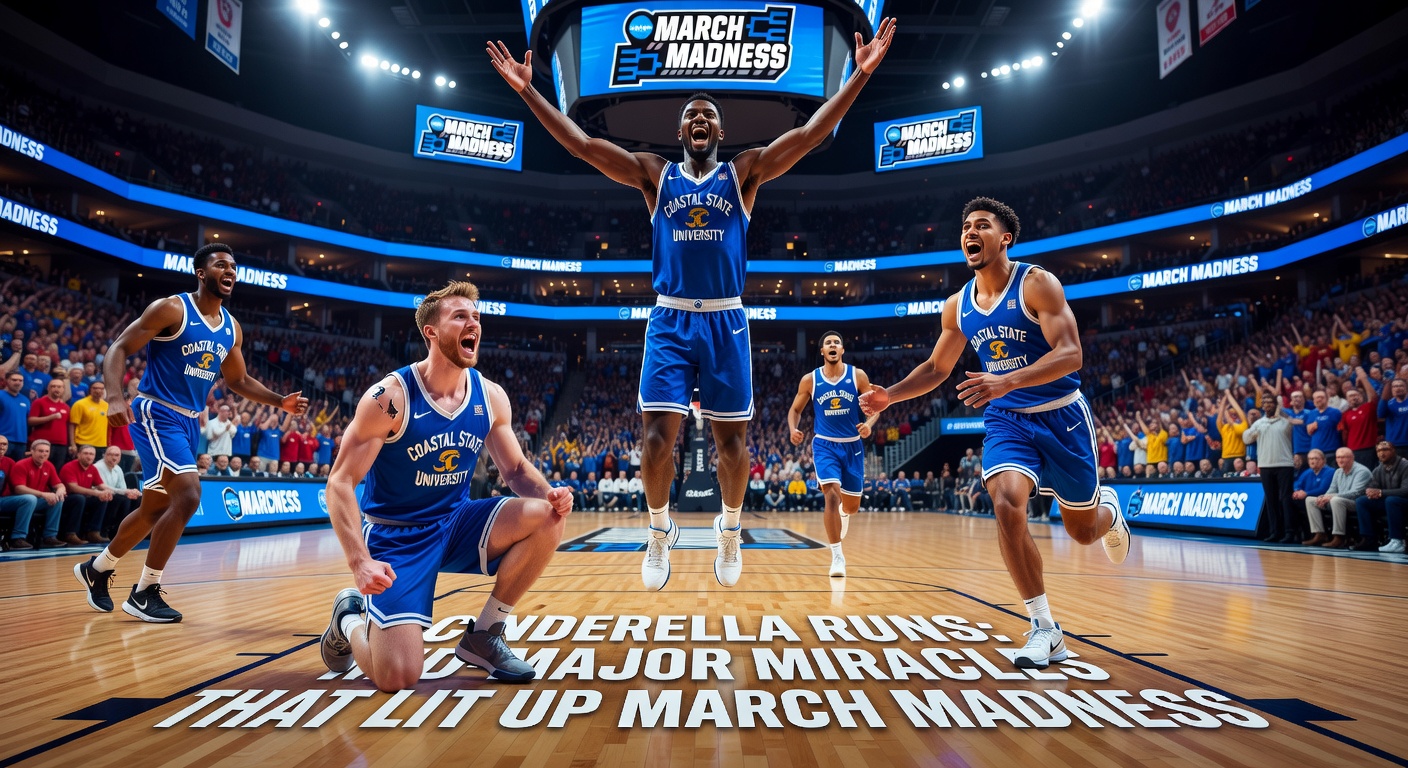
Dunk City and Loyola's Quiet Storm
Then came 2013's Florida Gulf Coast University, nicknamed Dunk City for their high-flying style; the 15th seed from the Atlantic Sun Conference beat Georgetown and San Diego State to reach the Sweet 16, dazzling with 19 dunks in two games, although they fell to Florida next, while their coach Andy Enfield leveraged transition scoring that averaged 85 points per outing. Loyola University Chicago followed in 2018; this 11th seed from the Missouri Valley Conference rode senior guard Clayton Custer's leadership to the Final Four, upsetting Miami, Tennessee, Kansas State, and Nevada before losing to Michigan, with their methodical pace holding foes under 65 points repeatedly.
What's interesting is how these stories cluster; mid-majors reached the Elite Eight eight times between 2006 and 2018, per tournament logs, fueling debates on seeding fairness even as power conferences dominate bids.
Factors Fueling Mid-Major Fireworks
Coaches from these programs swear by film study marathons and scout reports that exploit mismatches, while players often log extra gym hours; Saint Joseph's University researchers, in a 2022 paper via their Kin Center for Business, Ethics and Leadership, analyzed 20 Cinderella runs and discovered that teams succeeding beyond the second round boast top-100 national tempo ratings despite mid-major schedules. But the rubber meets the road in March, where neutral sites level talent gaps; observers note how fatigue from weaker non-conference games actually toughens these squads for the grind.
- Defensive pressure: Forces turnovers at 20% clips, per Synergy Sports data.
- Three-point volume: Mid-majors attempt 10 more attempts per game than seeds predict.
- Rest advantages: Fewer deep conference runs mean fresher legs come tournament time.
Take Oral Roberts in 2021; this 16th seed Summit League team pushed No. 1 seed Houston to the brink in round two, thanks to guard Max Abmas's 29-point explosion, although they exited there, highlighting how one star can elevate a roster.
Recent Twists and April 2026 Buzz
The 2023 tournament delivered with Florida Atlantic University reaching the Final Four as a 9th seed from Conference USA; they dismantled Memphis, FAU's run exposed vulnerabilities in mid-major pipelines, while San Diego State from the Mountain West hit the title game as a 5th seed, blending mid-major grit with top-end talent. And now, as April 2026 unfolds post-tournament, chatter swirls around McNeese State from the Southland Conference, whose 12th-seeded squad notched Sweet 16 wins over powerhouses before bowing out, reigniting hopes that mid-majors can still steal headlines amid NIL deals and transfer portals reshaping rosters.
Figures from the CBS Sports analysis of the 2026 bracket show double-digit seeds winning 18 first-round games, the highest since 2016, underscoring the trend's persistence even as super conferences consolidate power.
Yet these runs carry legacies; alumni donations surge 15% post-deep tournaments, according to advancement office reports from affected schools, while players like VCU's Havoc crew land pro contracts at higher rates.
Conclusion
Cinderella runs remind everyone why March Madness captivates; mid-major miracles expose the tournament's democratic core, where seeding crumbles under superior execution, and underdogs like Villanova, George Mason, VCU, and Loyola etch names into history, even as evolving landscapes challenge their paths forward. Data confirms these stories occur roughly every two years with a Sweet 16 breakthrough, keeping fans glued and brackets busted; as 2026's echoes fade, the next fairy tale waits in the wings, ready to light up arenas once more.