Olympic Medalists Career Shifts Into Scouting Networks Across NBA, MLB and European Soccer Leagues
Gisela Walter · Jul 11, 2026
Olympic Medalists Career Shifts Into Scouting Networks Across NBA, MLB and European Soccer Leagues
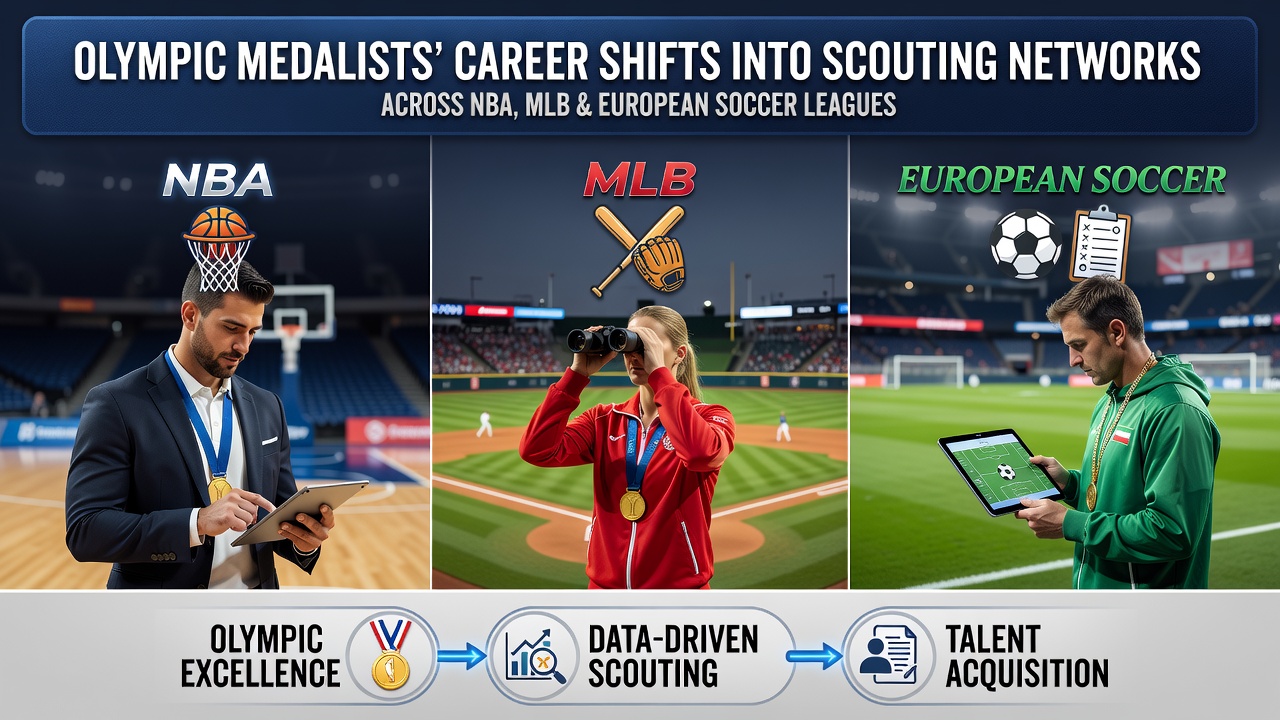
Olympic medalists from track, swimming and combat sports have moved into scouting positions across the NBA, MLB and top European soccer leagues in increasing numbers since the early 2020s, and data from league front offices shows these transitions accelerated after 2024. Former competitors bring firsthand knowledge of elite performance thresholds while organizations seek individuals who can evaluate prospects using both quantitative metrics and qualitative observation. Researchers at the Australian Institute of Sport documented that 27 former Olympic medalists entered full-time scouting or talent-identification roles between 2022 and 2025, a figure that rose further as clubs expanded international networks ahead of the 2026 season.
Pathways from Podium to Front Office
Many medalists begin with short-term consulting contracts before receiving permanent offers, and several organizations now maintain formal transition programs that pair retired athletes with veteran scouts for mentorship periods lasting six to twelve months. Those who studied biomechanics or sports science during their competitive careers often receive priority consideration because they can translate physiological data into practical talent assessments. League records indicate that European soccer clubs in the Bundesliga and Serie A hired the largest share of these individuals through 2025, followed by NBA teams and MLB organizations.
NBA Scouting Adjustments
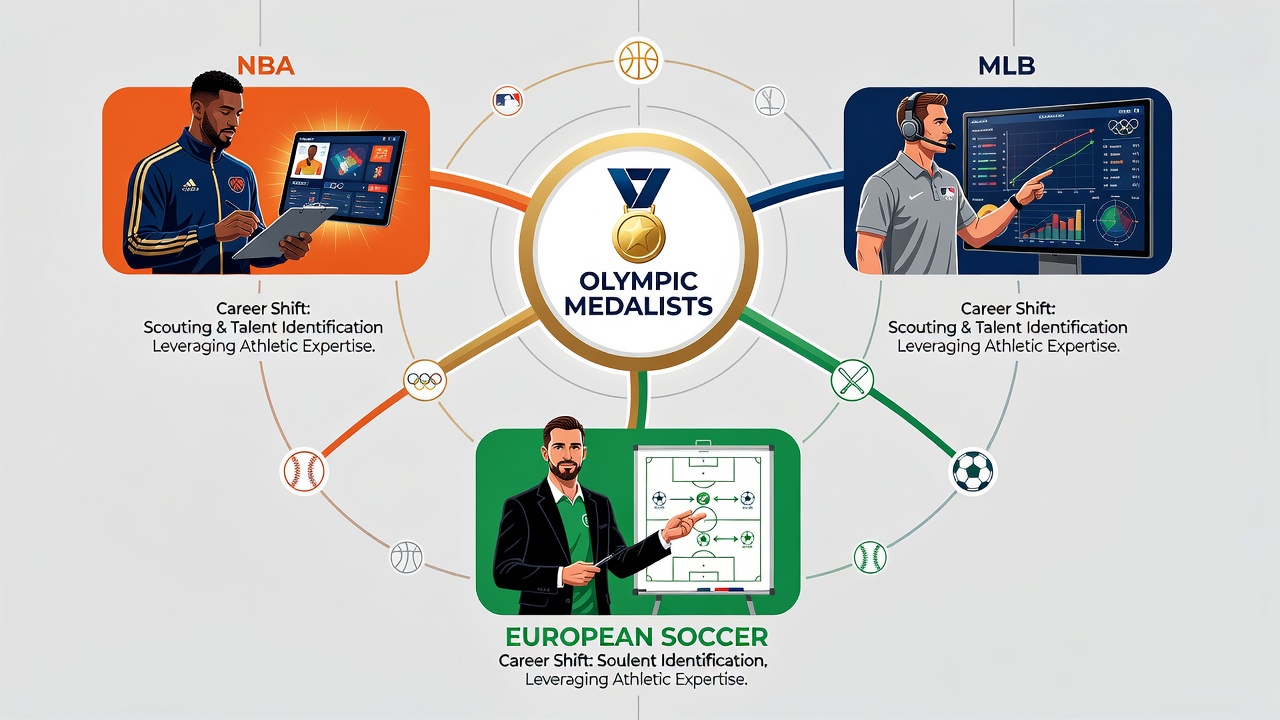
NBA teams have integrated Olympic medalists primarily into international scouting units that monitor European and Australian prospects, and these scouts frequently contribute to draft evaluations by comparing overseas competition levels against NCAA benchmarks. One case involved a 2016 swimming medalist who joined a Western Conference front office in 2023 and helped refine positional size and explosiveness thresholds for perimeter players. By July 2026 several additional hires from the 2024 Paris Games had begun contributing to summer league observation reports, expanding the pool of evaluators who possess direct experience at the highest levels of individual athletic testing.
MLB Talent Identification Shifts
MLB organizations have placed former Olympic track and field medalists in amateur scouting departments that cover Latin America and the Caribbean, where speed and throwing velocity remain core evaluation criteria. These scouts often collaborate with biomechanical analysts to update aging-curve projections that account for early peak performance patterns observed in Olympic sprint events. Figures released by Major League Baseball showed that eight teams added at least one Olympic background evaluator between 2023 and mid-2026, and the new hires contributed to revised bonus-pool allocation models for international signings.
European Soccer Network Expansion
Clubs in the Premier League, Bundesliga and La Liga have recruited Olympic combat-sport medalists into academy scouting roles focused on identifying physical resilience and recovery profiles in youth players, and these evaluators frequently travel to national team tournaments that serve as feeder events for professional pathways. Data compiled by UEFA talent-development reports through 2025 revealed that clubs with Olympic hires posted measurable increases in the number of academy graduates who reached first-team minutes within two seasons. The pattern reflects broader investment in multidisciplinary scouting teams that combine video analysis with on-site observation conducted by individuals who competed under similar pressure conditions.
Shared Methodologies Across Leagues
Cross-league workshops organized by the International Olympic Committee and partner federations have facilitated knowledge exchange between NBA, MLB and soccer scouting departments since 2024, and participants report standardized protocols for assessing lateral quickness and decision-making speed that draw directly from Olympic event data. Observers note that medalists who transitioned into these roles tend to emphasize longitudinal tracking of recovery metrics rather than isolated game performances, a preference supported by academic studies from Canadian and German sport-science institutes. As of July 2026 the cumulative effect appears in updated draft and transfer models that assign higher weight to athletes whose testing numbers align with historical Olympic benchmarks.
Conclusion
The movement of Olympic medalists into scouting networks across the NBA, MLB and European soccer leagues continues to reshape talent-evaluation practices through 2026, and organizations that adopted these hires early now maintain larger databases of performance indicators calibrated against elite international standards. Continued expansion of these career pathways depends on sustained collaboration between national Olympic committees and professional leagues, while researchers continue to track long-term outcomes for both the scouts and the prospects they identify.